The beginning of 1st January 2026 marks a critical compliance shift under GST and Income Tax laws in India. Several deadlines lapse on 31st December 2025, and multiple system-driven restrictions and consequences become applicable thereafter.
Missing these changes can result in late fees, interest, loss of ITC, inoperative PAN, suspension of GST registration, and higher tax outgo.
This article explains all important changes effective from 1st January 2026, including some commonly ignored but high-risk compliance points.
1. GSTR-9 / GSTR-9C Due Date Over – Late Fee Becomes Applicable
The due date for filing GSTR-9 and GSTR-9C for FY 2024-25 is 31st December 2025.
From 1st January 2026, these returns can still be filed but with late fees, which are turnover-based:
GSTR-9 Late Fee Structure (FY 2022-23 onwards)
| Annual Turnover | Late Fee per Day (CGST + SGST) | Maximum Late Fee |
|---|---|---|
| Up to ₹5 crore | ₹50 (₹25 + ₹25) | 0.04% of turnover |
| ₹5 crore to ₹20 crore | ₹100 (₹50 + ₹50) | 0.04% of turnover |
| Above ₹20 crore | ₹200 (₹100 + ₹100) | 0.05% of turnover |
🔹 Late fee continues to accrue till the date of filing
🔹 No waiver is automatic after the due date
🔹 GSTR-9C cannot be filed without GSTR-9
Late fee on GSTR 9C is Rs.200 per day and maximum is 0.05% of turnover
2. Belated or Revised ITR Not Allowed After 31st December 2025
For FY 2024-25 (AY 2025-26):
- Belated Return (Section 139(4))
- Revised Return (Section 139(5))
👉 Both can be filed only up to 31st December 2025
From 1st January 2026, neither belated nor revised ITR can be filed for FY 2024-25.
3. Only Updated Return Available – With Heavy Cost
After 31st December 2025, taxpayers can file only an Updated Return under Section 139(8A).
Key Updated Return Rules (Corrected)
- Can be filed up to 4 years from the end of the relevant assessment year
- Applicable only if:
- Income was missed
- Wrong claim of loss/exemption/deduction
- Refund cannot be claimed
- Loss cannot be carried forward
- Additional tax payable
📌 Updated return is not a correction tool, it is a tax recovery mechanism.
4. PAN Will Become Inoperative if Not Linked with Aadhaar
If PAN is not linked with Aadhaar:
Consequences of Inoperative PAN
- ITR cannot be filed
- Refund will not be issued
- TDS will be deducted at higher rates
- Bank transactions may be restricted
- PAN becomes invalid for GST, investments, loans, and financial compliance
📌 PAN-Aadhaar linking is mandatory for most individuals, except notified exemptions.
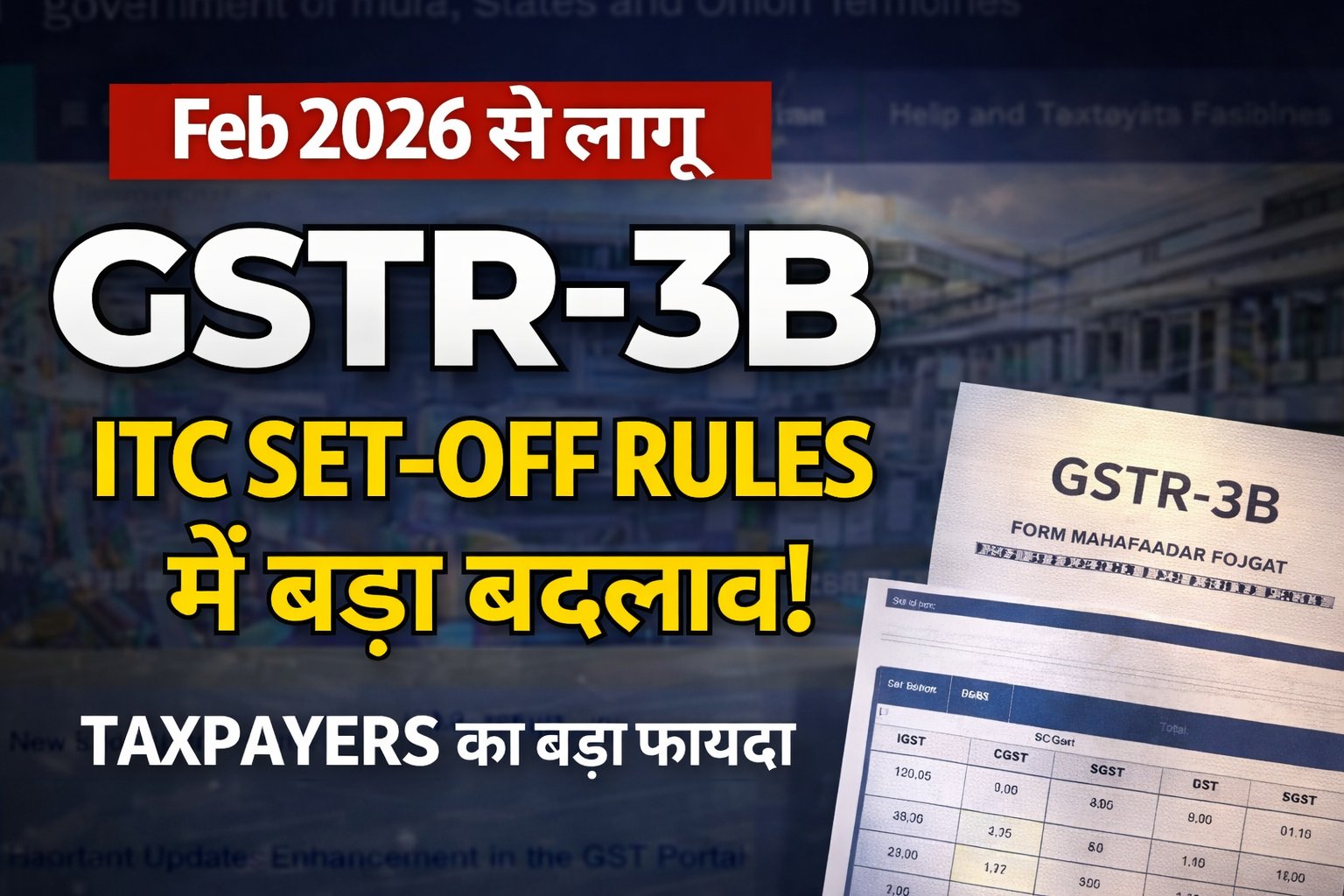
5. ITC Blocking in GSTR-3B from 1st January 2026
From January 2026 returns onwards, GST portal will block filing of GSTR-3B in the following cases:
ITC Reclaim Ledger Validation
- ITC reclaimed in Table 4(D)(1)
➝ Cannot exceed:- Closing balance of ITC Reclaim Ledger
- Plus ITC reversed in Table 4(B)(2) of current period
RCM Ledger Validation
- RCM ITC in Table 4A(2) / 4A(3)
➝ Cannot exceed:- RCM liability paid in Table 3.1(d)
- Plus available balance in RCM Ledger
❌ Negative ledger balance will block GSTR-3B filing
6. Non-Furnishing of Bank Account Details = Auto Suspension of GST Registration
As per Rule 10A:
- Bank account details must be furnished:
- Within 30 days of GST registration, or
- Before filing GSTR-1 / IFF (whichever is earlier)
If Not Furnished
- GST registration will be automatically suspended
- Taxpayer cannot file returns or generate e-way bills
- Suspension continues until bank details are updated
7. GST Returns Older Than 3 Years Cannot Be Filed
A crucial but often ignored change:
👉 GST returns older than 3 years become time-barred
This applies to:
- GSTR-1
- GSTR-3B
- GSTR-4
- GSTR-5, 6, 7, 8,9
📌 If return becomes time-barred:
- ITC is permanently lost
- Annual return reconciliation becomes impossible
- Notices and demand proceedings may follow
8. Check Your AATO – GST Registration May Be Mandatory
At the start of a new year, businesses must recalculate Aggregate Annual Turnover (AATO).
If AATO exceeds:
- ₹20 lakh (₹10 lakh for special category states)
- ₹40 lakh for goods (subject to conditions)
👉 GST registration becomes mandatory
Failure to register leads to:
- Tax demand with interest
- Penalty
- Loss of ITC to customers
9. Advance Tax – Pay by 15th March to Save Interest
If total tax liability exceeds ₹10,000, advance tax is applicable.
Last instalment:
- 15th March – 100% of tax liability
Failure leads to:
- Interest under Section 234B & 234C
- Additional cost even if ITR is filed on time
10. Regularly Check Income Tax Portal for Notices & Communications
Taxpayers must regularly check:
- E-Proceedings
- Intimations under Section 143(1)
- Defective return notices
- Refund adjustments
- AIS/TIS mismatches
Ignoring portal communications may result in:
- Best judgment assessment
- Refund withholding
- Penalty proceedings
Visit www.cagurujiclasses.com for practical courses