India–EU Trade Deal Explained in Simple Words: What Changes for India, Businesses and Consumers
India has recently finalised a major trade agreement with the European Union (EU). This deal is being called one of the biggest trade agreements in India’s history because it impacts exports, imports, industries, jobs, investments and even consumer prices.
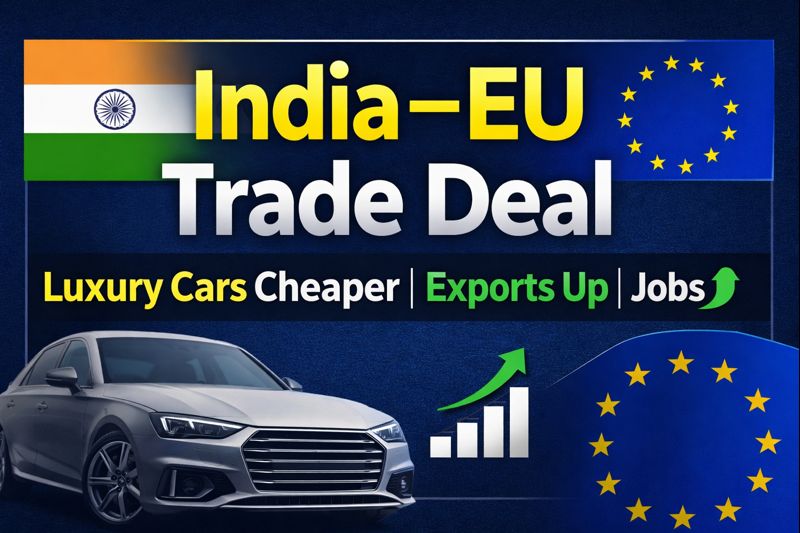
One of the most visible results of this deal is the reduction in luxury car prices, but the agreement goes much beyond cars.
What Is the India–EU Trade Deal?
The India–EU Free Trade Agreement (FTA) is an agreement where:
- India will reduce import duties on selected European goods
- The European Union will reduce or remove duties on many Indian goods
- Both sides will make trade easier by reducing paperwork and barriers
In short, buying and selling between India and Europe becomes cheaper and smoother.
Why Is This Deal Important for India?
The European Union is one of India’s biggest trading partners. However, earlier:
- Indian goods faced high taxes and strict rules in Europe
- European goods faced high import duties in India
This deal helps:
- Increase Indian exports
- Make imports cheaper
- Improve business confidence
- Strengthen India’s global trade position
1️⃣ Impact on Luxury Cars and Premium Vehicles
Why Luxury Cars Became Cheaper
Luxury cars like Audi, BMW, Mercedes, Porsche etc. are mostly imported from Europe or use European parts.
Earlier:
- Very high import duty made these cars extremely expensive
After the trade deal:
- Import duties on premium vehicles are being reduced
- Companies are passing this benefit to customers
Real Example
- Earlier price of a luxury SUV: ₹2.30 crore
- New price after duty reduction: ₹1.60 crore
- Direct benefit to buyer: around ₹70 lakh
Who Benefits the Most?
- Buyers of high-end imported cars
- Premium and luxury vehicle segment
Mass-market cars will not see much change.
2️⃣ Impact on Indian Exports
Indian exporters are among the biggest beneficiaries of this deal.
Sectors That Benefit:
- Textiles and garments
- Leather goods and footwear
- Engineering goods
- Chemicals and pharmaceuticals
- Marine products
- Gems and jewellery
Because:
- European import duties will reduce
- Indian products become more competitive
- Export volumes can increase
This will help Indian manufacturers grow and expand globally.
3️⃣ Impact on Jobs and Manufacturing
When exports increase:
- Factories produce more
- New units are set up
- Employment increases
Labour-intensive industries like:
- Textiles
- Leather
- Jewellery
are expected to create large number of jobs, especially for semi-skilled workers.
This also supports the Make in India initiative.
4️⃣ Impact on Services Sector (IT, Professionals, Consultants)
India is strong in services, and this deal supports that strength.
Expected benefits:
- Better access for Indian IT and software companies
- More opportunities for consultants, engineers and professionals
- Easier movement for short-term work assignments
- Increased export of services
This can significantly boost India’s service-based exports.
5️⃣ Impact on Foreign Investment
The trade deal gives a stable and long-term framework to investors.
Likely outcomes:
- More European companies investing in India
- Setting up manufacturing units in India
- Technology transfer
- Joint ventures with Indian companies
India becomes a preferred destination for European businesses looking at Asia.
6️⃣ Impact on Indian Consumers (Other Than Cars)
Consumers may see benefits like:
- Better quality imported products
- Competitive prices in some categories
- More product choices
However:
- Price reduction will be gradual
- Sensitive sectors are protected
The government is ensuring domestic industries are not harmed suddenly.
7️⃣ Strategic and Global Importance
This deal is not only about trade.
It shows:
- India’s commitment to global trade rules
- Reduced dependence on limited trading partners
- Stronger economic ties with developed economies
It also improves India’s image as a reliable global trade partner.
8️⃣ Will All Benefits Come Immediately?
No.
Key points:
- Tariff reductions will happen in phases
- Some benefits will take 2–5 years
- Certain sectors will open slowly to protect local industry
Luxury car price reduction is one of the first visible benefits, but many more will follow.
Simple Conclusion
The India–EU trade deal is a win-win agreement.
- Exporters get better market access
- Manufacturers get growth opportunities
- Consumers get better prices and choices
- Luxury car buyers see immediate benefits
- Economy gets long-term strength
Luxury cars becoming cheaper is just the beginning — the real impact will be seen across industries, jobs and trade growth in the coming years.
Visit www.cagurujiclasses.com for practical courses