Date of Press Release: 13 December 2025
Issued by: Central Board of Direct Taxes (CBDT)
Authority: Income Tax Department, Government of India
1. Background of the Press Release
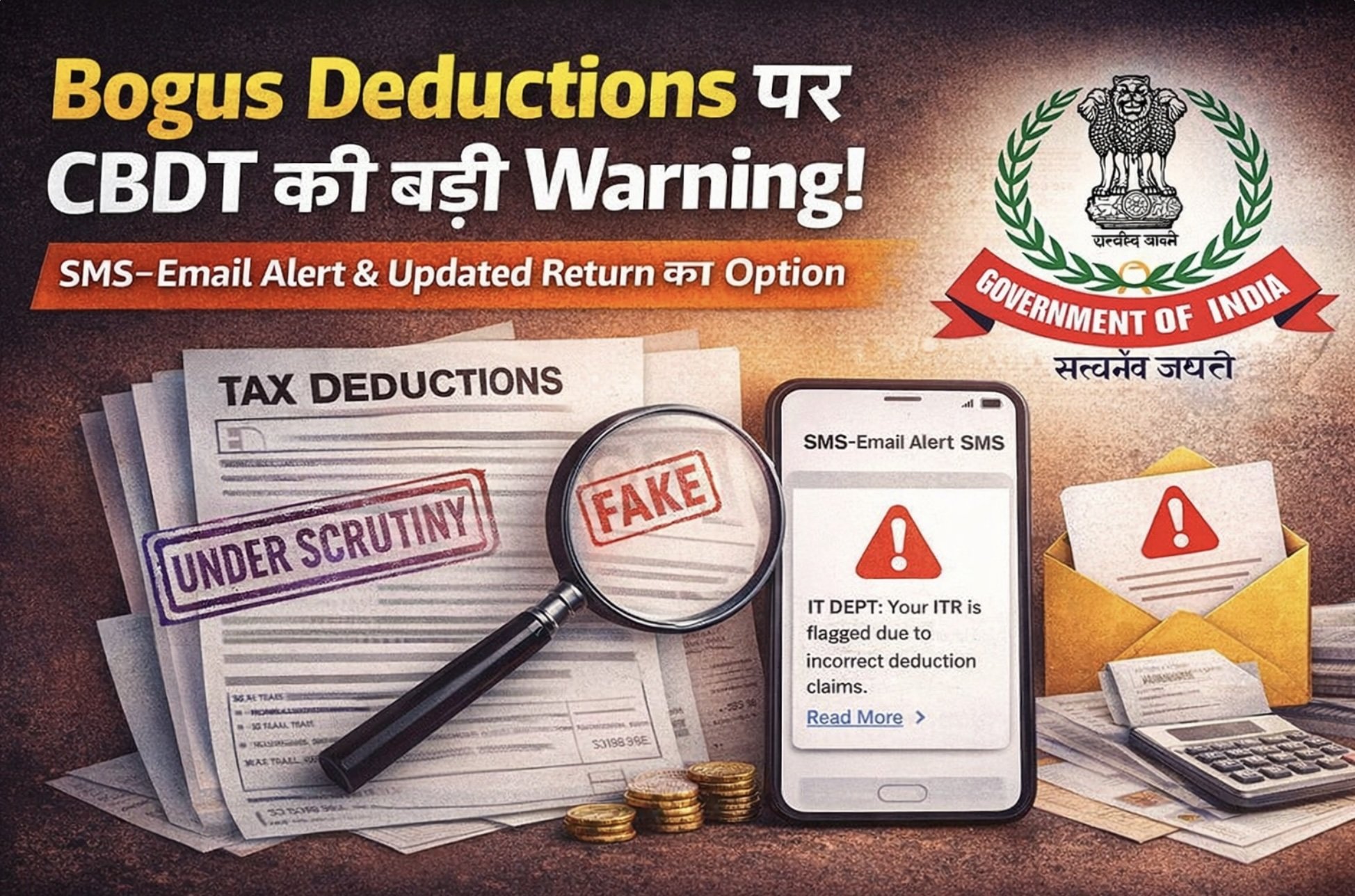
The Income Tax Department has recently observed a large number of incorrect and bogus claims of deductions and exemptions being made in Income-tax Returns (ITRs). These claims were allegedly facilitated by certain intermediaries and agents operating on a commission basis across India.
To address this issue, the CBDT has issued a strong nudge advisory to taxpayers, warning them against such practices and encouraging voluntary compliance.
2. What Are Bogus Deduction Claims?
Bogus deduction claims refer to false or non-genuine deductions or exemptions claimed by taxpayers to reduce their tax liability without actual eligibility.
According to the CBDT, these claims mainly involve:
- Donations to Registered Unrecognised Political Parties (RUPPs)
- Donations to certain Charitable Institutions or Trusts
- Claims made without genuine receipts or proof
- Claims supported by fabricated or manipulated documents
In many cases, taxpayers were promised higher refunds by intermediaries in exchange for a commission.
3. Modus Operandi Identified by the Department
Based on investigations and data analytics, the Department found that:
- Certain RUPPs were non-functional or non-operational
- Many entities were registered at fake or non-existent addresses
- Donations were routed through dummy accounts
- Receipts were issued without actual charitable or political activity
- Bogus donation entries were later used by companies and individuals to reduce taxable income
Search and survey actions have already been carried out against some of these entities, and incriminating evidence has been collected.
4. Use of Data Analytics & AI by CBDT
The CBDT has significantly strengthened its data-driven compliance mechanism.
Key highlights:
- Advanced data analytics and AI-based risk profiling are being used
- Suspicious claims are detected by matching:
- ITR data
- Donation disclosures
- Banking transactions
- Entity registration data
- The Department has identified high-risk behaviour patterns among taxpayers
This indicates that manual errors and intentional misreporting are now easily traceable.
5. Sections Under Scanner
The press release specifically mentions scrutiny under Section 80G of the Income-tax Act, 1961, which allows deductions for donations to specified funds, institutions, and charitable trusts.
However, deductions under other sections related to donations and exemptions may also come under scrutiny if found suspicious.
6. SMS & Email Advisories to Taxpayers
As a taxpayer-friendly step, CBDT has launched a Targeted NUDGE Campaign.
What does this mean?
- Taxpayers suspected of making bogus claims are receiving:
- SMS alerts
- Email advisories
- These communications are being sent from 12 December 2025 onwards
- Advisories are sent to registered mobile numbers and email IDs
The objective is not immediate penalty, but voluntary correction.
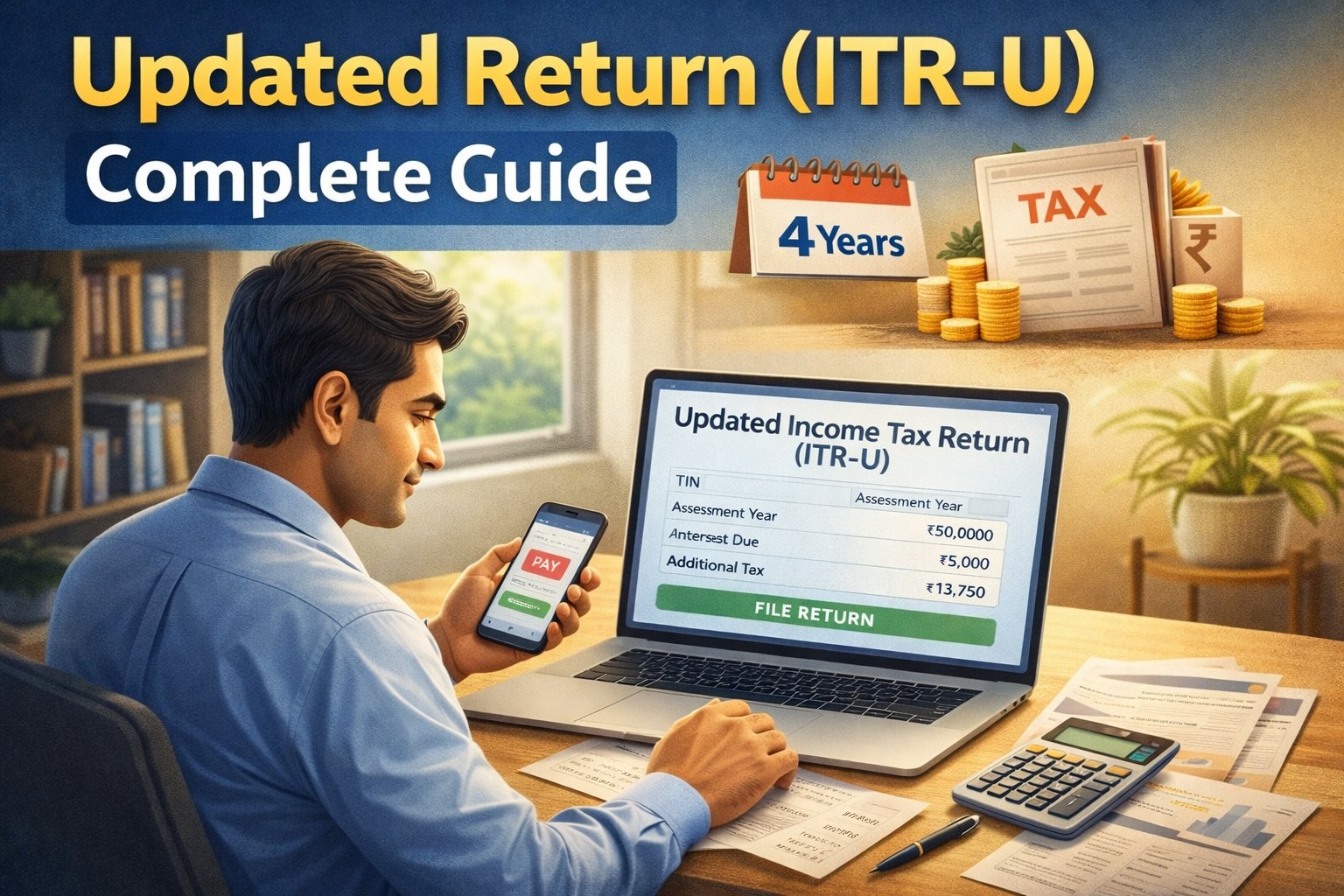
7. Opportunity to Correct Mistakes – Updated Returns
CBDT has clarified that:
- Many taxpayers have already revised their ITRs for AY 2025-26
- Others have filed Updated Returns for past assessment years
- Taxpayers are being given a chance to:
- Withdraw incorrect deduction claims
- Pay applicable tax and interest
- Avoid harsh penal consequences
This aligns with the government’s “trust first, enforce later” approach.
8. Consequences of Ignoring the Advisory
If taxpayers ignore the advisory and continue with bogus claims:
- Cases may be selected for scrutiny assessment
- Penalties may be imposed for under-reporting or misreporting of income
- Prosecution proceedings may be initiated in serious cases
- Intermediaries facilitating such claims may also face action
Hence, ignoring the nudge can lead to serious financial and legal consequences.
9. What Should Taxpayers Do Now?
Taxpayers are advised to:
- Review their ITRs carefully, especially donation-related deductions
- Verify:
- Name and registration status of donee entities
- Valid receipts and approval under the Income-tax Act
- File a Revised or Updated Return if any incorrect claim is found
- Ensure correct mobile number and email ID are updated on the Income Tax Portal
- Avoid agents promising guaranteed refunds
10. Key Takeaway
The CBDT’s press release is a clear warning and an opportunity.
Claim only what you are genuinely entitled to.
Short-term refunds can lead to long-term trouble.
With increased use of technology, tax evasion through bogus deductions is no longer safe or invisible.
Visit www.cagurujiclasses.com for practical courses